About Me About Me About Me About Me About Me About Me About Me About Me About Me
About Me About Me About Me About Me About Me About Me About Me About Me About Me

I am a master’s student at ETH Zurich, studying computer science. I aspire to creative practice involving photography, graphic design, and interactive media; thus my research focuses on developing intuitive computational methods that assist artists and designers. I completed by bachelor’s degree in computer science and cognitive science at the University of Toronto.
I am grateful to have worked as a research assistant at the Dynamic Graphics Project Lab, advised by Prof. Karan Singh and Dr. Karran Pandey. Previously, I was also fortunate to develop a compact method for producing film-like colours from digital images, under the supervision of Prof. Michael Brown and Dr. Hakki Karaimer, at Samsung AI Center - Toronto.
Email: hyjang at student.ethz.ch
Research Research Research Research Research Research Research Research Research
Research Research Research Research Research Research Research Research Research
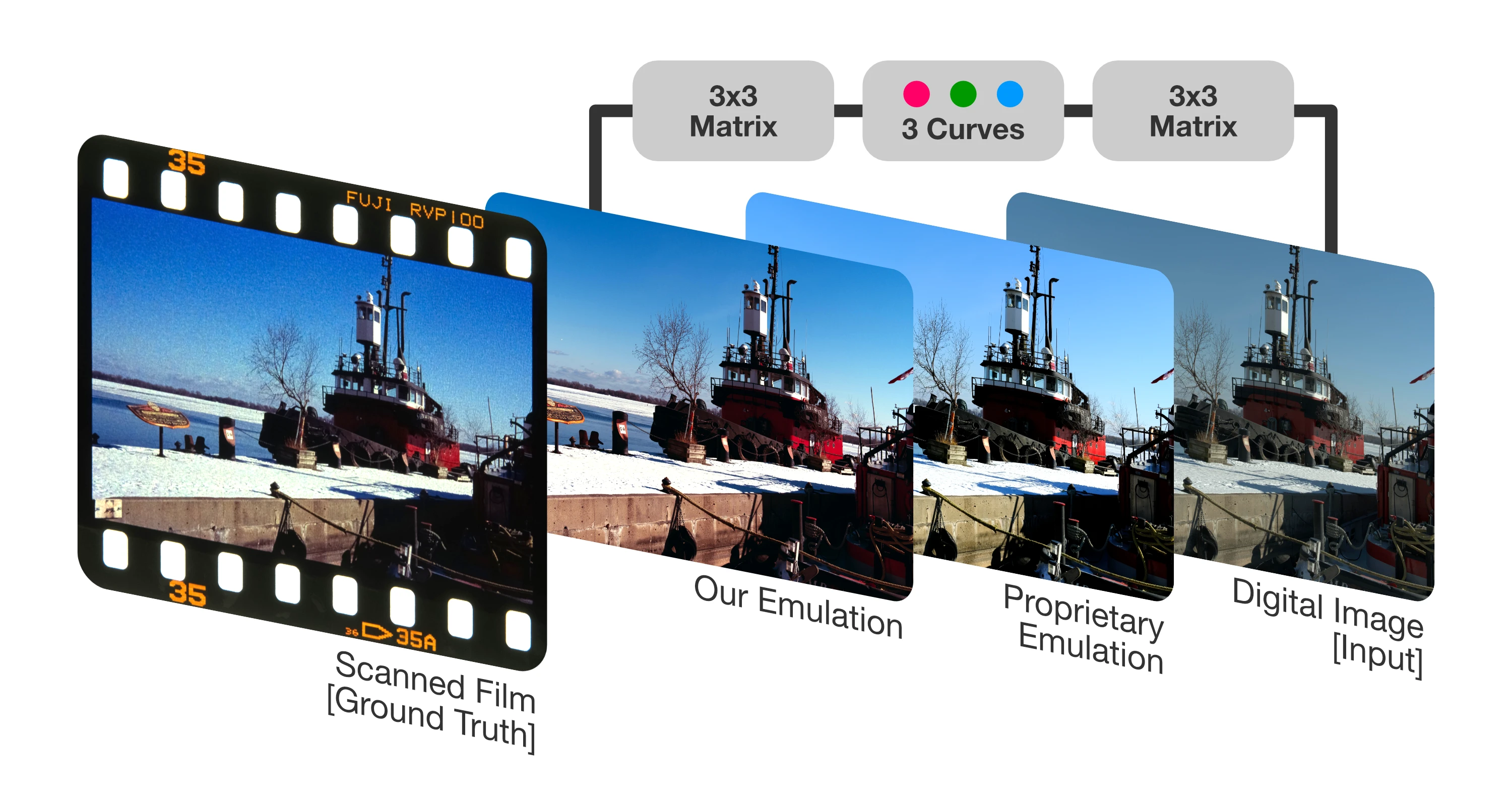
We present a compact, physically-based model that faithfully emulates the colour response of positive photographic film from a digital RAW image.
Our approach analytically mirrors the film “capture-develop–scan” chain, all with around 30 trainable parameters optimised on 3168 colour patch pairs captured on film. Qualitative results show our model more closely matching real film than proprietary methods, and artefact-free rendering over discrete LUTs. We hope our model offers production-ready film emulation and a path for archival of discontinued film.
Full paper and poster available.
Photography Photography Photography Photography Photography Photography
Photography Photography Photography Photography Photography Photography
Interactive Media Interactive Media Interactive Media Interactive Media Interactive Media
Interactive Media Interactive Media Interactive Media Interactive Media Interactive Media
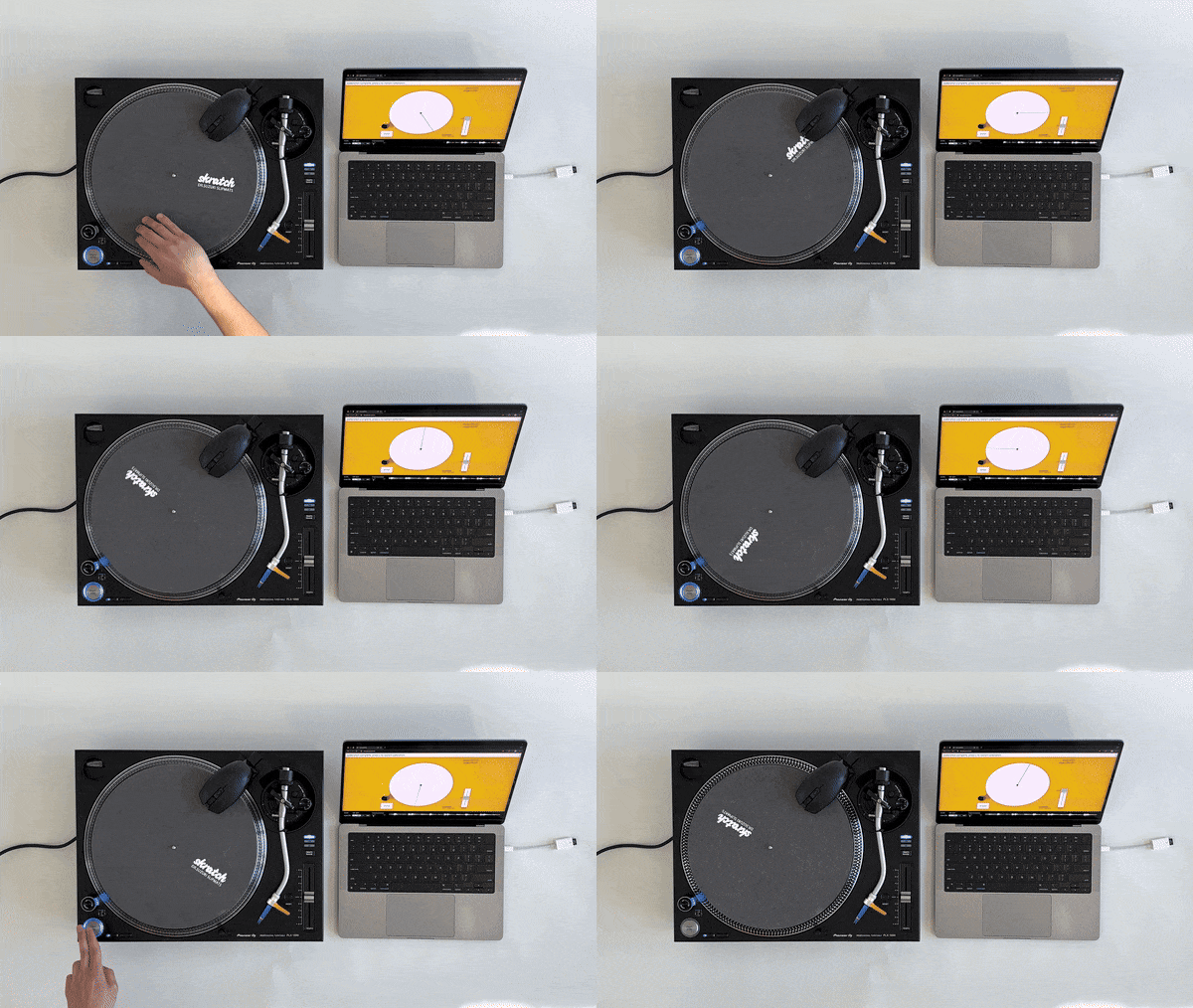
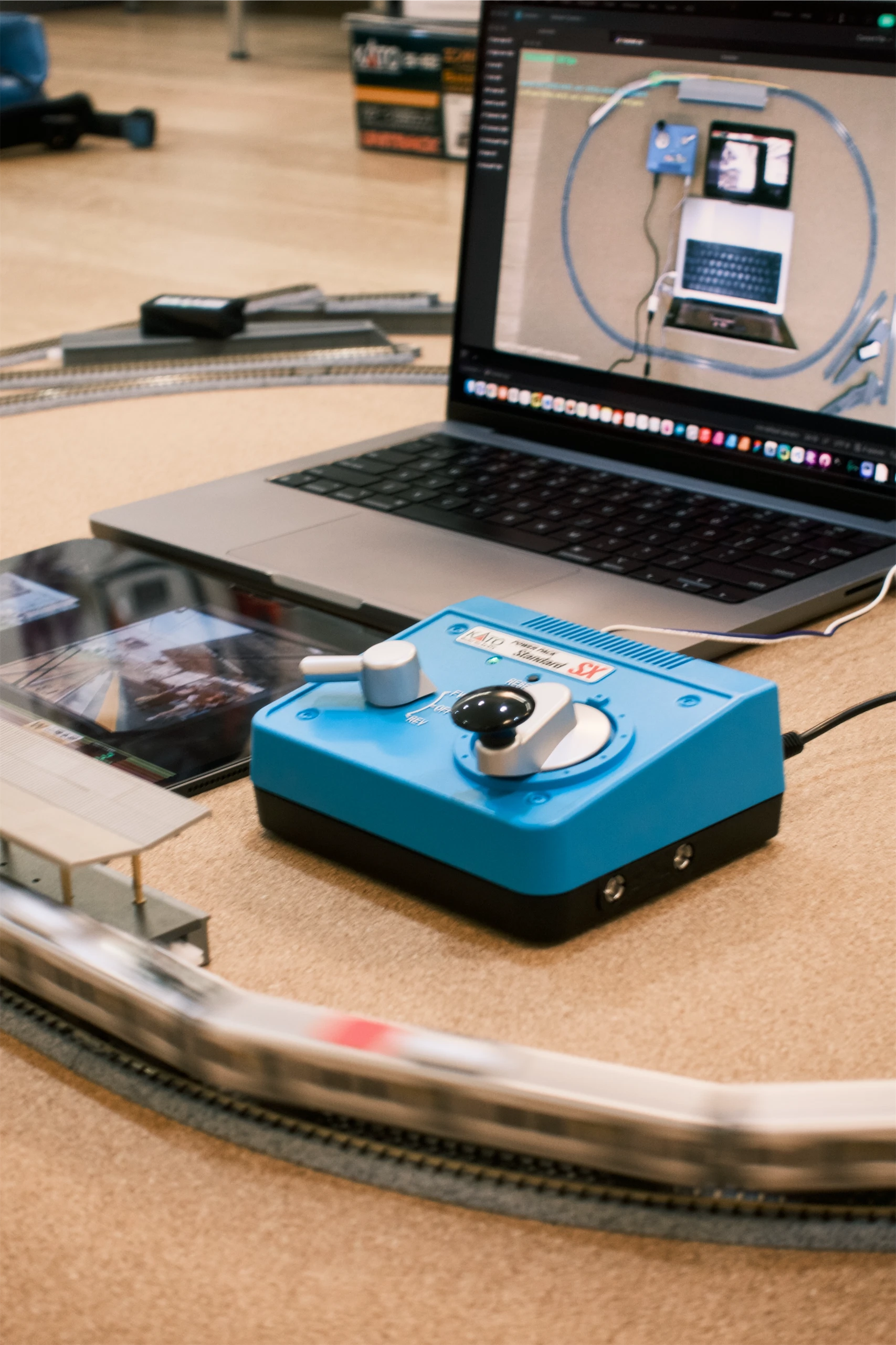
Vinyl allows for direct, physical manipulation of audio playback. Digital audio is widely available but relies on software controls. Digital Vinyl System (DVS) combines the best of both worlds, allowing DJs to use a real vinyl record to control digital audio for mixing and scratching. While DVS is typically implemented using specialised hardware, mouseDVS is a low-cost proof of concept that uses an ordinary optical mouse. Simply place the mouse on a suitable tracking surface (e.g., a felt slipmat), open the web app on a computer, and start playing.
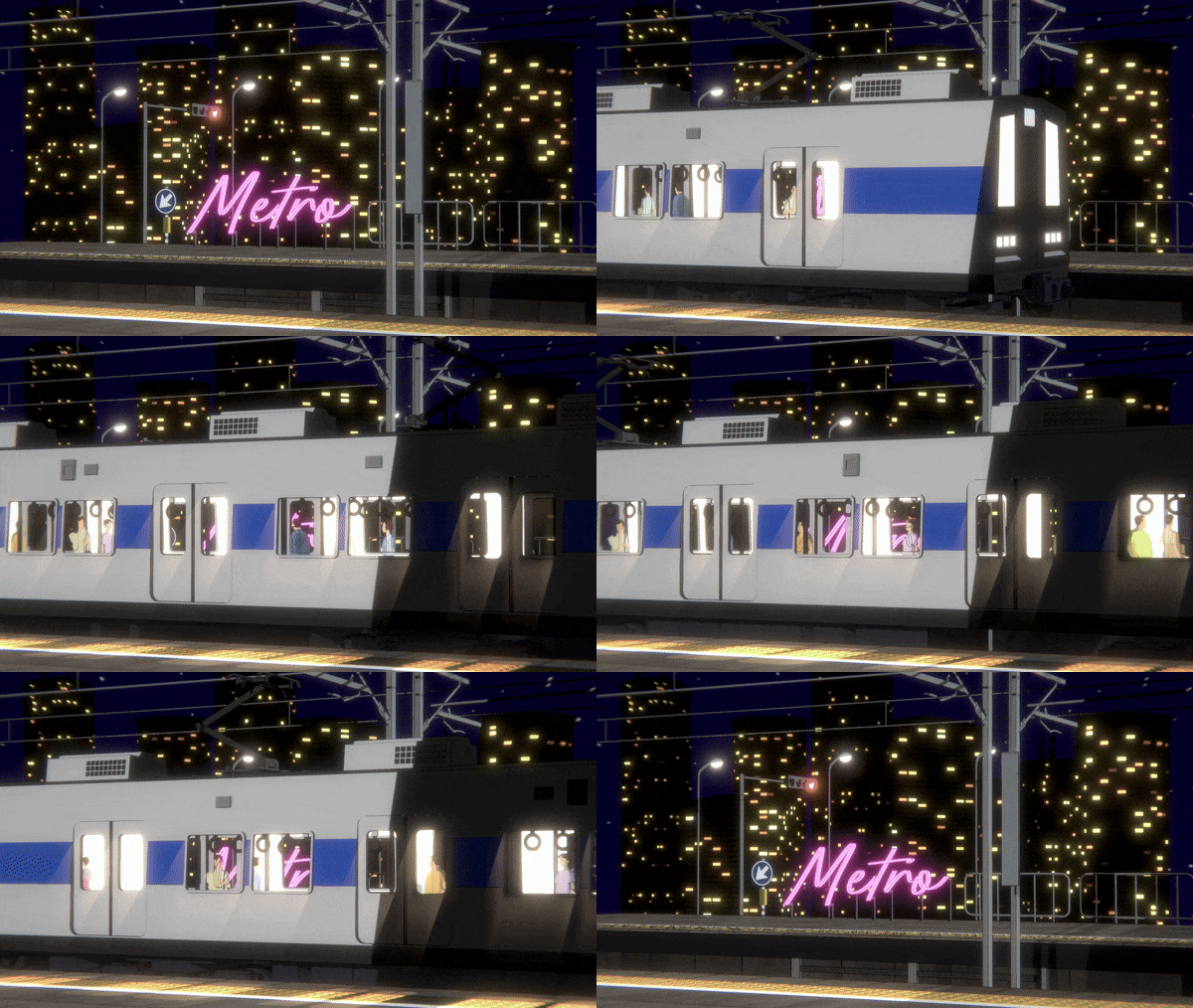
Metro is an interactive and animated scene of a train arriving to its station, rendered in real-time in the Unity game engine. The visual theme is heavily inspired by the 1995 movie “Whisper of the Heart”, replicating the classic Japanese hand-drawn animation style. High contrast toon and edge outline shaders are used as primary techniques. The train arrives and departs upon user input or detected movement from an Xbox Kinect sensor. Part of an in-person interactive art exhibition in Gimpo, South Korea, 2023.
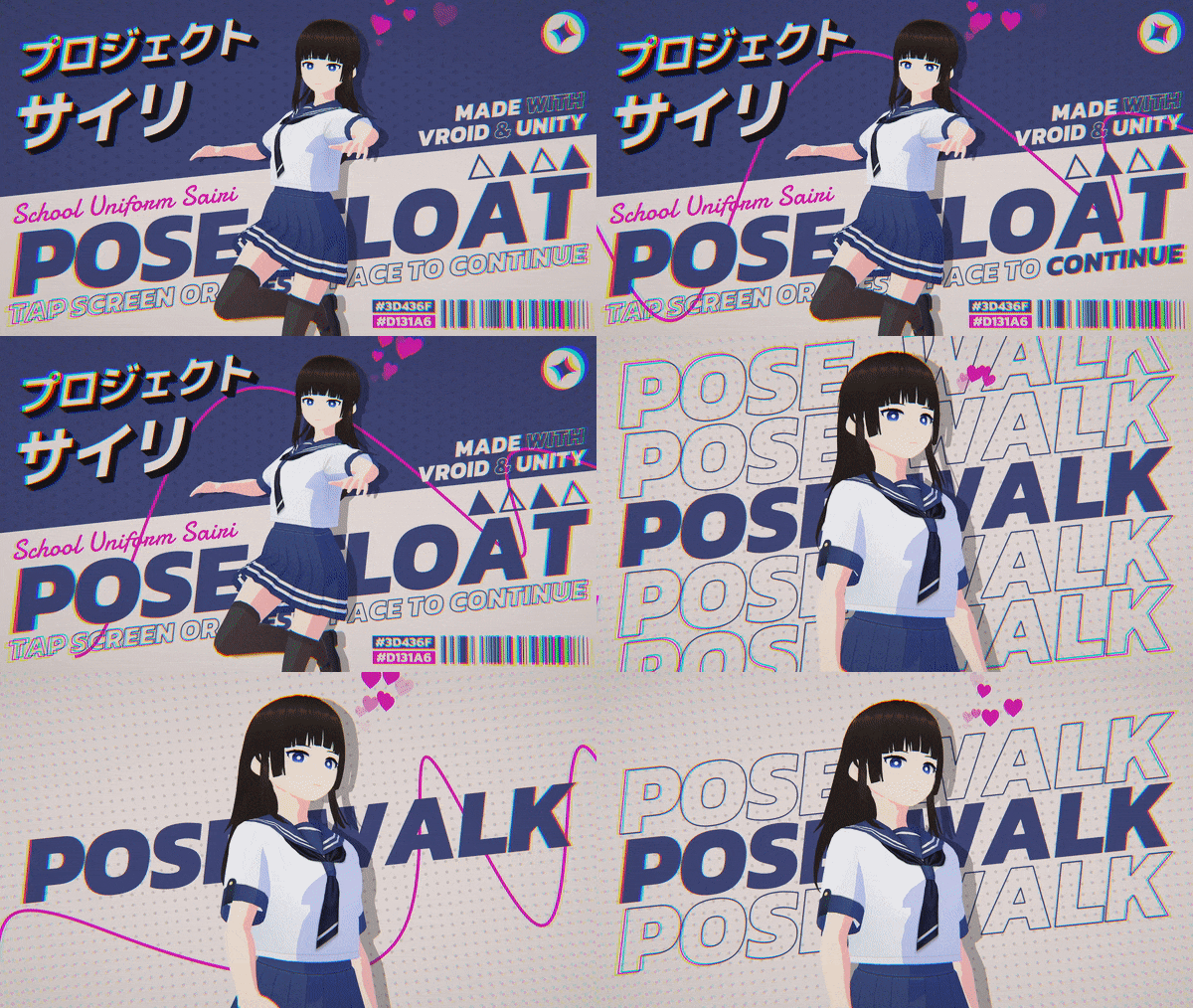
Blurring the lines between visually expressive but static posters and interactive software. Features a game-like interface with a strong emphasis on stylised visual aesthetics. Sairi is also a compilation of various real-time 2D and 3D rendering techniques; including cartoon-style cel shading with outlines, seamless character animation transitions, depth-based live shader replacement, and procedurally generated Bezier splines. Interactive web demo available.
Extras Extras Extras Extras Extras Extras Extras Extras Extras Extras Extras Extras
Extras Extras Extras Extras Extras Extras Extras Extras Extras Extras Extras Extras